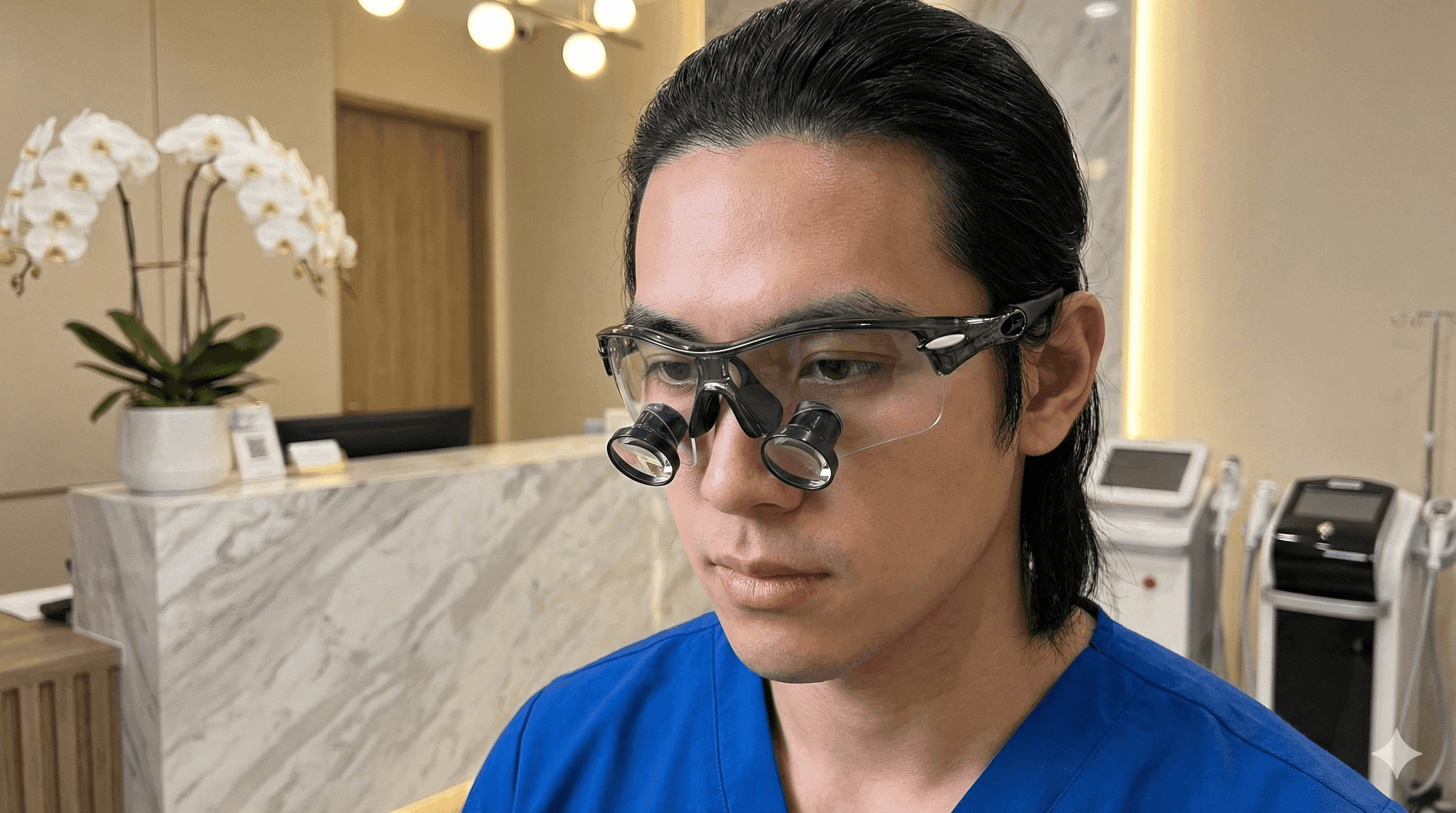
HeliosX lightweight loupes for students and residents

Loupes for Residents

Loupes for Residentson a trainee budget.

HeliosX turns loupe selection into a practical decision: match the model to the work, the posture, the budget, and the measurements before final production.

01

Choose by workflow

The right loupe depends on what the clinician does every day. HeliosX pages connect each audience to the models and education resources that fit that workflow.

Start with procedure mix and wear time.
Use ergonomic prismatic loupes when posture is the top priority.
Use higher magnification only when the work demands it.

02

Magnification changes by specialty

A 2004 peer-reviewed survey of 148 specialists and senior trainees in the west of Scotland (Jarrett, Microsurgery 2004) found clear specialty patterns in intraoperative magnification use. Plastic, maxillofacial, ophthalmic, and otolaryngology surgeons reported frequent use of magnification, cardiothoracic and pediatric surgeons leaned heavily on loupes, and neurosurgery was more microscope-centered.

Source: Jarrett PM. Intraoperative magnification: who uses it? Microsurgery. 2004;24:420–422.

Loupes are a practical choice when the work benefits from magnification without microscope setup.
Microscopes remain important for very high magnification and the smallest operative structures.
The useful question is specialty plus procedure: what detail, posture, setup time, and field size does the case require?

03

Affordable without feeling cheap

A lower price should not force clinicians into vague specs, weak fit support, or disposable optics. HeliosX is built around affordable premium value: clear model roles, fair pricing, and guidance before production begins. A 2004 peer-reviewed survey of 148 specialists and senior trainees (Jarrett PM, Microsurgery 2004;24:420–422) documented the intraoperative magnification ranges that real surgeons actually use — useful context when comparing brand claims against case-mix reality.

Source: Jarrett PM. Intraoperative magnification: who uses it? Microsurgery. 2004;24:420–422.

Transparent product roles and price ranges.
Measurement guidance for pupillary distance and working distance.
Education-first buying support for students, residents, dentists, and surgeons.

Buyer criteria

Choose by work, posture, and fit.

A useful loupe guide answers the real buying question. Start with the procedures you perform, then compare optics around posture, magnification, fit support, and price.

Workflow

Which procedures, appointments, or cases will these loupes support most often?

Posture

Do you need ergonomic prismatic viewing or adjustable working distance?

Magnification

How much detail do you need before field of view becomes too narrow?

Fit

Do you have accurate pupillary distance, working distance, and prescription details?

Budget

Are you buying for school, residency, practice, or a focused upgrade?

Support

Can you easily get help with measurements, shipping, prescription, and setup?

Questions

Quick answers

What are the best loupes for residents?

The best choice depends on specialty, posture, magnification needs, and budget. HeliosX maps each audience to affordable, ergonomic prismatic, and high-magnification options.

What measurements do I need to submit for HeliosX loupes?

Pupillary distance and working distance. The customer measurement flow is emailed after checkout and includes step-by-step instructions, smartphone-app recommendations, and manual measurement guidance. Prescription customers also submit a current eyeglass prescription.

How long does it take to receive HeliosX loupes after ordering?

Custom production begins after you submit your measurements. Standard turnaround is roughly 3-5 weeks from measurement submission to delivery for US and Canadian orders. Express options are offered at checkout when available.

Can I return HeliosX loupes if they do not fit?

Yes. Orders are fully refundable before measurements are submitted because each pair is custom-built. After delivery, HeliosX offers a 30-day return window on orders in original condition with all packaging and accessories.

Are HeliosX loupes covered by a warranty?

Yes. Every HeliosX loupe ships with a warranty covering manufacturing defects and optical performance. Repairs and lens updates are also supported. See /warranty for the full policy.

How does HeliosX pricing compare to Orascoptic, SurgiTel, and LumaDent?

HeliosX models start at $270 for lightweight Galilean systems and $710 for ergonomic prismatic builds. That is roughly 50 to 70 percent less than equivalent loupes from legacy brands, with comparable optics, custom IPD fitting, and a measurement-first ordering process.