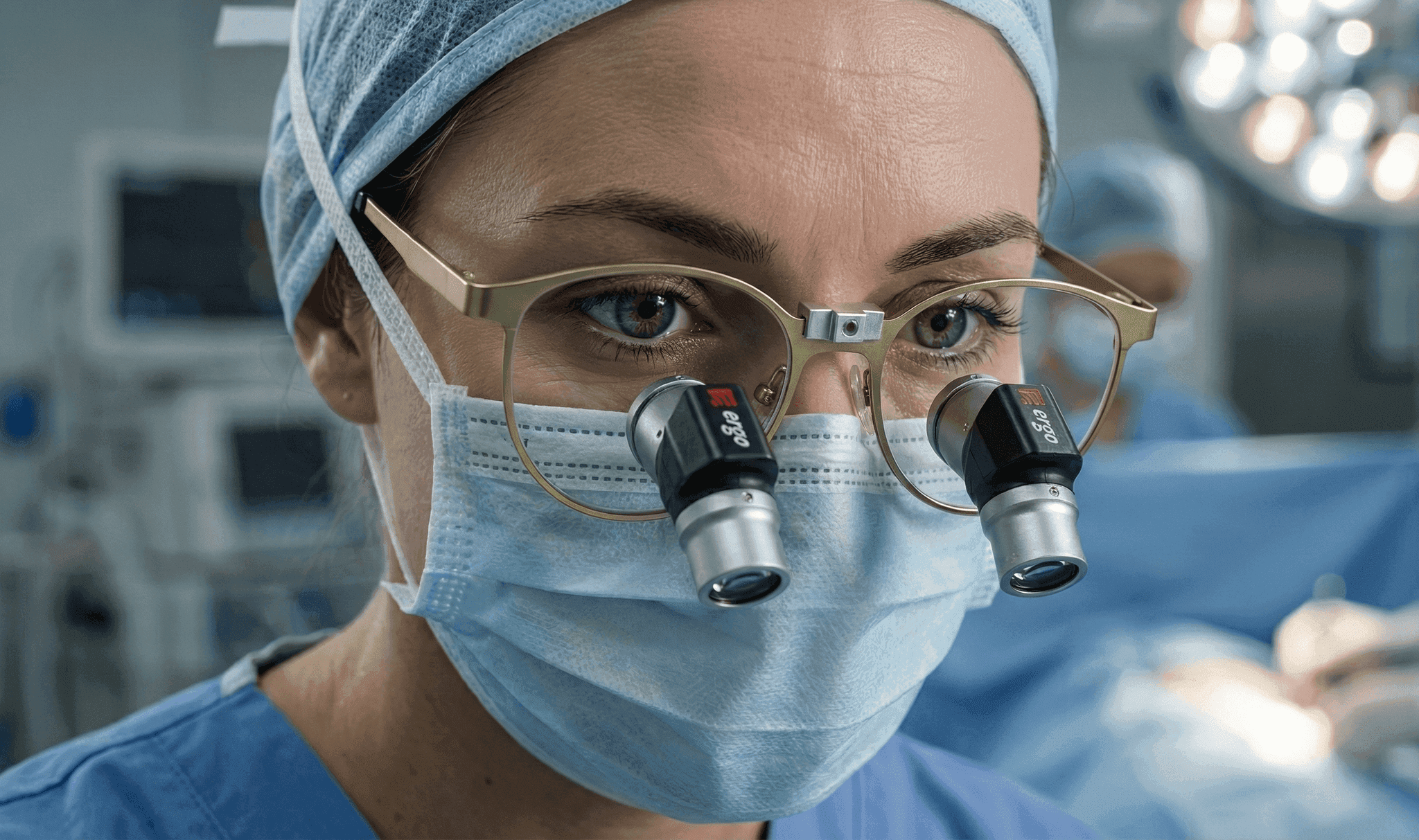
Surgeon wearing HeliosX loupes in a clinical setting

Ophthalmic surgery

Ophthalmic Surgical Loupesfor oculoplastic and lid work.

Ophthalmic surgeons reported frequent intraoperative magnification use in the surveyed patterns, with workflows that mix loupes and the operating microscope. HeliosX higher-magnification ergonomic prismatic loupes cover the loupe portion of that practice.

01

Where loupes fit ophthalmic work

Intraocular surgery sits firmly under the microscope. Loupes cover oculoplastic, lacrimal, lid, orbit, and external eye procedures where loupe magnification is sufficient and microscope setup would be overkill.

Oculoplastic and lid work where 4.0x to 6.0x covers the field.
Lacrimal and orbit procedures that benefit from ergonomic prismatic posture support.
External eye, plastic, and reconstructive work where the loupe replaces the microscope.

02

Which HeliosX model fits ophthalmic workflows

Kepler is the right choice for the higher-magnification end of ophthalmic loupe work. Apollo and Medusa cover the cases that sit at 4.0x to 5.0x with ergonomic posture support.

Kepler: 4.0x to 6.0x for oculoplastic, lid, and microsurgery-adjacent work.
Apollo: ergonomic prismatic at 3.0x to 6.0x for the broader case mix.
Medusa: adjustable working distance for surgeons alternating between procedure types.

03

Fit notes for ophthalmic specialists

Ophthalmic surgeons often work very close to the patient. Measure working distance in your real operating posture and pick magnification around the most common loupe-based procedure in your case mix.

Measure working distance in your real operating posture, not a generic preset.
Pick magnification around the most common loupe-based procedure.
Confirm prescription needs after checkout via the measurement flow.

Buyer criteria

Choose by work, posture, and fit.

A useful loupe guide answers the real buying question. Start with the procedures you perform, then compare optics around posture, magnification, fit support, and price.

Workflow

Which procedures, appointments, or cases will these loupes support most often?

Posture

Do you need ergonomic prismatic viewing or adjustable working distance?

Magnification

How much detail do you need before field of view becomes too narrow?

Fit

Do you have accurate pupillary distance, working distance, and prescription details?

Budget

Are you buying for school, residency, practice, or a focused upgrade?

Support

Can you easily get help with measurements, shipping, prescription, and setup?

Questions

Quick answers

What magnification do oculoplastic surgeons typically use?

Oculoplastic surgeons commonly use 4.0x to 6.0x for lid, lacrimal, and orbit work. Intraocular cases are performed under the operating microscope rather than with loupes.

Are HeliosX loupes a substitute for the operating microscope?

For intraocular cases, no — loupes do not replace the microscope. For oculoplastic, lacrimal, lid, and external eye work, ergonomic prismatic loupes are the standard tool and HeliosX builds across the magnification range that practice needs.

What measurements do I need to submit for HeliosX loupes?

Pupillary distance and working distance. The customer measurement flow is emailed after checkout and includes step-by-step instructions, smartphone-app recommendations, and manual measurement guidance. Prescription customers also submit a current eyeglass prescription.

How long does it take to receive HeliosX loupes after ordering?

Custom production begins after you submit your measurements. Standard turnaround is roughly 3-5 weeks from measurement submission to delivery for US and Canadian orders. Express options are offered at checkout when available.

Can I return HeliosX loupes if they do not fit?

Yes. Orders are fully refundable before measurements are submitted because each pair is custom-built. After delivery, HeliosX offers a 30-day return window on orders in original condition with all packaging and accessories.

Are HeliosX loupes covered by a warranty?

Yes. Every HeliosX loupe ships with a warranty covering manufacturing defects and optical performance. Repairs and lens updates are also supported. See /warranty for the full policy.